Crown Jewels of the Reef Hobby

17 of the rarest, most prized marine aquarium fish and corals: where they live, why they're rare, what they need, and whether keeping one is ethical.

By the Coral Compass team ·

Some reef animals are famous because almost nobody has seen one alive. Some live deeper than divers normally go, some come from a single island, and some are protected by law. Others, especially named corals, are prized because they come from a single colony and spread only as frags. This page collects the hobby's "crown jewels" and sticks to what we could verify. Prices appear only when a non-vendor source gave a dated figure; everything else says so plainly.

The ethical rule of thumb: choose captive-bred fish and aquacultured frags whenever they exist, ask for CITES paperwork on listed species, and never buy animals collected where collection is illegal. All stony corals (Scleractinia) are in CITES Appendix II. CITES status for fish was checked against Australia's EPBC list of CITES species (7 Feb 2025 compilation).

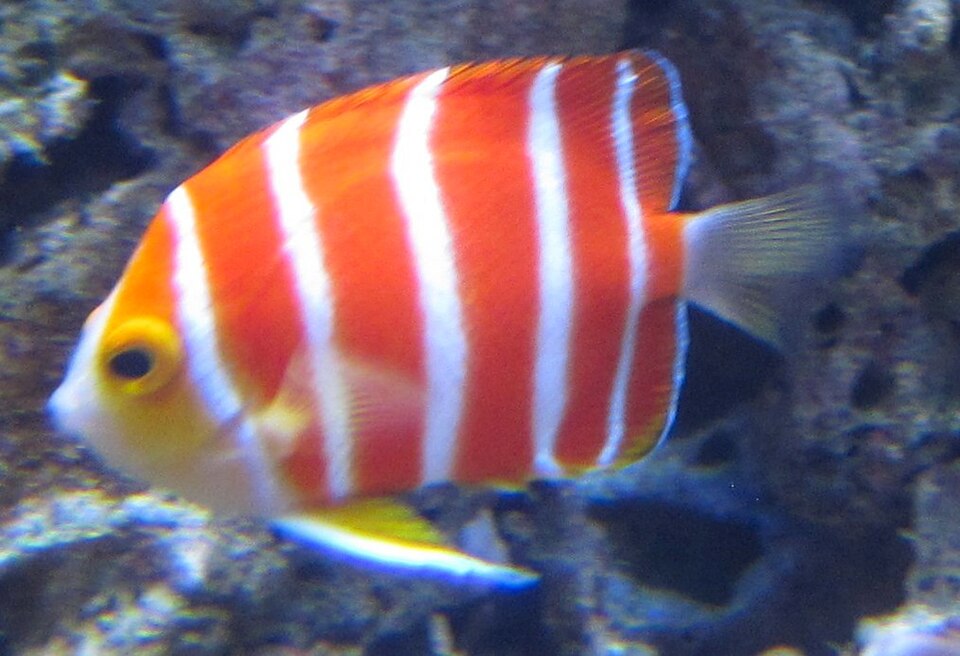
AdultPeppermint angelfish (Centropyge boylei)
Photo: Wmpearl / CC0 · Wikimedia Commons

Fish

Peppermint angelfish

Centropyge boylei (often placed in subgenus Paracentropyge)

Where it's found
Known only from Rarotonga in the Cook Islands, on steep outer reef slopes at about 55–120 m among rubble, overhangs and caves.
Why it's rare
Its depth is beyond normal scuba range, so collection needs technical divers, and the known range is a single island. Described only in 1992.
Care
Small (to about 7 cm). Little is known about its diet in the wild (thought to include worms, crustaceans, sponges and tunicates). Deep-water fish need slow decompression after capture; public aquariums such as the Waikiki Aquarium have displayed it. Not a fish for a typical home tank.
Price
No dated, verifiable retail price found. Wikipedia reports one specimen was offered for US$30,000, without a date, so we don't quote it as a market price.
Conservation & ethics
Wild-caught only; no captive breeding found. Not listed in the CITES Appendices (checked against Australia's EPBC list of CITES species, Feb 2025 compilation).

Juvenile: we couldn't find a freely licensed juvenile photo; juveniles are almost never seen. Browse public photos on iNaturalist.

Sources: Wikipedia · FishBase · iNaturalist
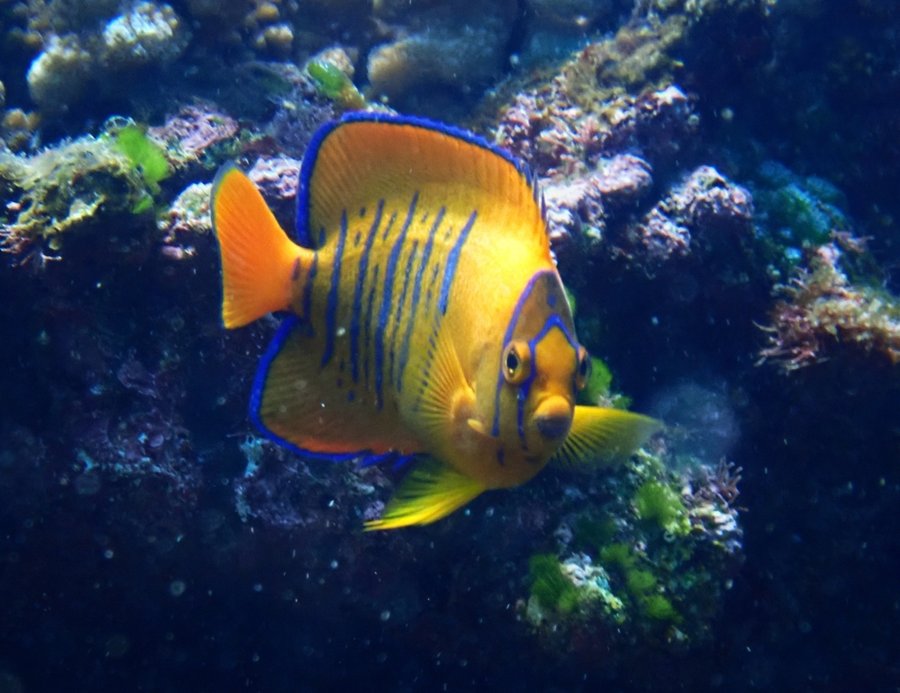
JuvenileJuvenile Clarion angelfish with blue vertical bars on an orange body
Photo: Alberto Alcalá / CC BY 4.0 · iNaturalist
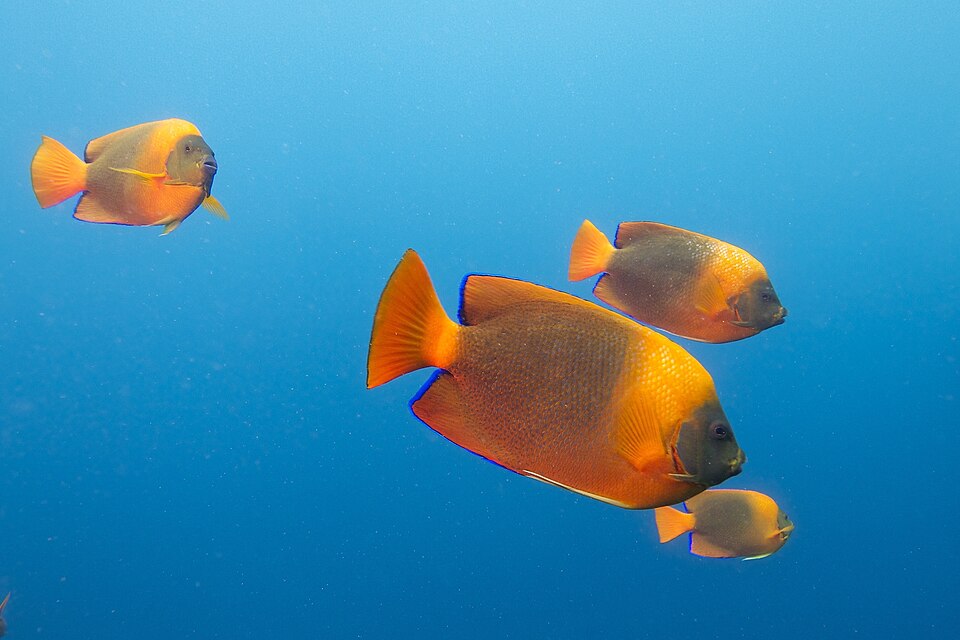
AdultClarion angelfish (Holacanthus clarionensis)
Photo: Elias Levy / CC BY 2.0 · Wikimedia Commons

Fish

Clarion angelfish

Holacanthus clarionensis

Where it's found
Eastern Pacific, almost entirely the Revillagigedo Islands off Mexico, on rocky reefs to about 30 m. Vagrants reach Baja California and Clipperton Island.
Why it's rare
Tiny natural range, and collection there became illegal once the Revillagigedo Islands were protected.
Care
Grows to about 20 cm, so it needs a large aquarium. Angelfish of this size may pick at corals and clams; treat as reef-with-caution.
Price
No dated, verifiable price found.
Conservation & ethics
Wild collection in its range is now illegal; captive-bred fish have entered the trade, and these are the only ethical choice. CITES Appendix II since 2 January 2017, so international trade needs CITES permits.

Juvenile vs adult: juveniles are bright orange with thin electric-blue vertical bars and blue-edged fins; the bars fade as the fish grows into the deeper orange-brown adult.

Sources: Wikipedia · FishBase · iNaturalist observations
AdultLive Clipperton angelfish (Holacanthus limbaughi) in an aquarium holding tank
Photo: USFWS Pacific Southwest Region / Public domain · Wikimedia Commons

Fish

Clipperton angelfish

Holacanthus limbaughi

Where it's found
Endemic to Clipperton Island, a French atoll about 2,560 km west of Costa Rica, at about 6–100 m.
Why it's rare
One remote atoll is its whole range. In 2009 a California dealer was caught smuggling 52 illegally collected fish declared as king angelfish.
Care
Grows to about 30 cm. Very little is known about its biology; not suitable for home aquariums.
Price
Not a market price: in the 2009 smuggling case (US Fish & Wildlife Service), the dealer reportedly intended to sell them for US$10,000 each.
Conservation & ethics
Wild-caught only. Listed in CITES Appendix III (from 13 June 2022). Treat any offered specimen with suspicion about legality.

Juvenile: no freely licensed juvenile photo exists that we could find. See FishBase photos.

Sources: Wikipedia · FishBase · Wikimedia Commons photo

Gem tang (Zebrasoma gemmatum)
Photo: Hausi (meerwasserwiki.de) / CC BY-SA 3.0 · Wikimedia Commons

Fish

Gem tang

Zebrasoma gemmatum

Where it's found
Southwestern Indian Ocean: South Africa, Mozambique, Madagascar, Réunion and Mauritius, usually deeper than 25 m (to about 60 m).
Why it's rare
Naturally rare, territorial and usually seen alone on deeper reefs, and much of its range is not heavily collected.
Care
Grows to about 22 cm. Like other Zebrasoma tangs it grazes algae, needs swimming room, and can be aggressive toward other tangs.
Price
US$300–3,000 per fish in 2023, as reported by Wikipedia (citing trade data).
Conservation & ethics
Wild-caught. IUCN: Data Deficient, because little is known about how collection affects the population. Not listed in the CITES Appendices (checked against Australia's EPBC list of CITES species, Feb 2025 compilation).

Sources: Wikipedia · FishBase · iNaturalist
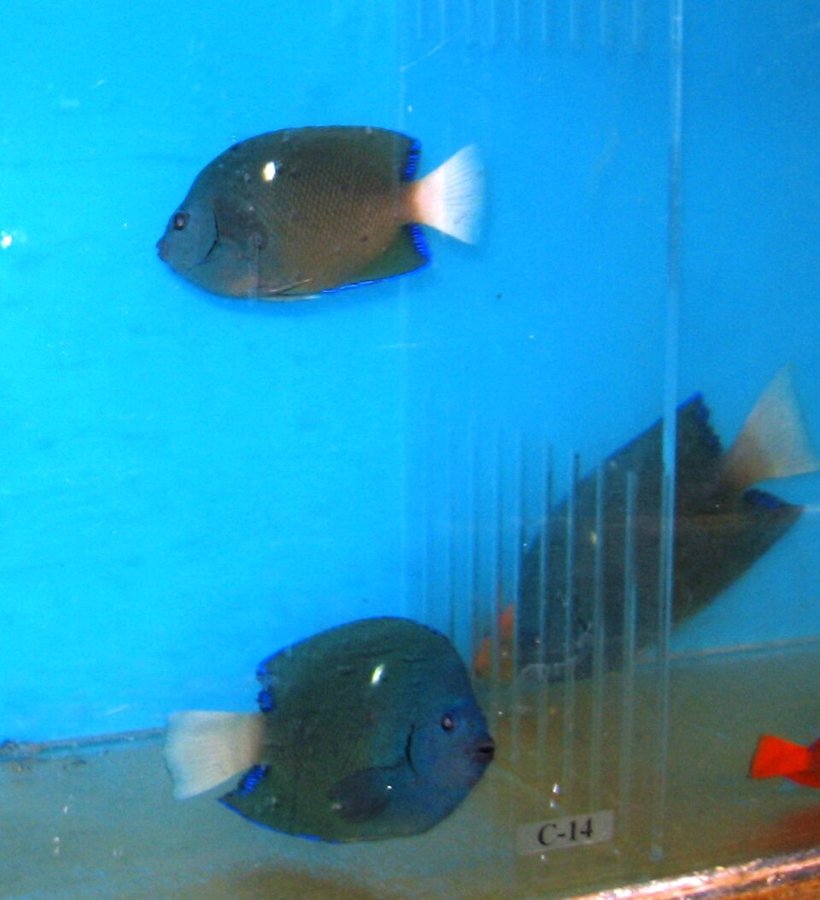
AdultAdult conspicuous angelfish (Chaetodontoplus conspicillatus) on a reef at Lord Howe Island
Photo: Ian V. Shaw / Reef Life Survey / CC BY 3.0 · Wikimedia Commons

Fish

Conspicuous angelfish

Chaetodontoplus conspicillatus

Where it's found
Southern Great Barrier Reef to central New South Wales, plus Lord Howe, Norfolk and New Caledonia, on coral and rocky reefs to about 40 m.
Why it's rare
It is not rare in the wild (Reef Life Survey records it at about 46% of sites in its range; IUCN Least Concern). It is rare in the hobby because its small range is mostly in Australian waters with limited export.
Care
About 10 cm per Reef Life Survey, found in water of about 19–25 °C, so it is subtropical rather than fully tropical.
Price
No dated, verifiable price found.
Conservation & ethics
Wild-caught. Not listed in the CITES Appendices (checked against Australia's EPBC list of CITES species, Feb 2025 compilation).

Juvenile: no freely licensed juvenile photo found. See Reef Life Survey photos.

Sources: Australian Museum · Reef Life Survey photos · iNaturalist

Fish

Ballina angelfish (look, don't take)

Chaetodontoplus ballinae

Where it's found
Northern New South Wales (Coffs Harbour, Ballina, North Solitary Islands) and Balls Pyramid near Lord Howe Island, usually at 25–125 m.
Why it's rare
Only a handful of specimens have ever been collected, and it lives at or below scuba limits.
Care
Not for aquariums.
Price
Not applicable.
Conservation & ethics
Protected in New South Wales because of its natural rarity and low abundance. Not listed in the CITES Appendices (checked against Australia's EPBC list of CITES species, Feb 2025 compilation). Included here as a conservation example only.

Photos: we couldn't find any freely licensed photo of this species (adult or juvenile). See the Australian Museum photo.

Sources: NSW DPI species page · Australian Museum · iNaturalist

Wrought-iron butterflyfish (Chaetodon daedalma)
Photo: Izuzuki / CC BY 4.0 · Wikimedia Commons

Fish

Wrought-iron butterflyfish

Chaetodon daedalma

Where it's found
Endemic to Japan: south of Sagami Bay, plus the Ryukyu, Ogasawara and Izu Islands, usually deeper than 10 m.
Why it's rare
Restricted range and it prefers cooler water than related species, so it is uncommon in the trade outside Japan.
Care
Grows to about 15 cm. Wild diet includes algae and invertebrates such as fanworms, hydroids and tunicates, so it is not reef-safe in the usual sense. Hobbyists also prize rare gold (xanthic) individuals, but we found no reliable source documenting them, so we don't profile them separately.
Price
Wikipedia says exported specimens command a high price; no dated figure found.
Conservation & ethics
Wild-caught. Not listed in the CITES Appendices (checked against Australia's EPBC list of CITES species, Feb 2025 compilation).

Sources: Wikipedia · FishBase · iNaturalist
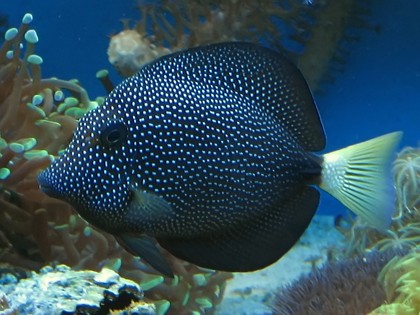
AdultBandit (banded) angelfish (Apolemichthys arcuatus)
Photo: Aquaimages (English Wikipedia uploader) / CC BY-SA 2.5 · Wikimedia Commons

Fish

Bandit (banded) angelfish

Apolemichthys arcuatus

Where it's found
Endemic to Hawaii and Johnston Atoll, on rocky reefs and under ledges at about 10–183 m.
Why it's rare
Common in Hawaii, but rare in the trade: commercial aquarium collection in Hawaii has been halted statewide since 2021 (West Hawaii since 2017), and in August 2026 the state Land Board rejected rules to reopen it.
Care
To about 18 cm. Its wild diet is mostly sponges, and Wikipedia describes it as difficult to keep.
Price
No dated, verifiable price found.
Conservation & ethics
Wild-caught; no captive breeding found. Not listed in the CITES Appendices (checked against Australia's EPBC list of CITES species, Feb 2025 compilation).

Juvenile: no freely licensed juvenile photo found. See public photos on iNaturalist.

Sources: Wikipedia · FishBase · Hawaii collection ruling (Earthjustice, 2026)

AdultMasked angelfish (Genicanthus personatus)
Photo: George Berninger Jr. / CC BY-SA 3.0 · Wikimedia Commons

Fish

Masked angelfish

Genicanthus personatus

Where it's found
Endemic to Hawaii, more common in the Northwestern Hawaiian Islands, at about 10–150 m.
Why it's rare
Deep habitat, a remote core range and Hawaii's collection halt (see above).
Care
To about 21 cm. Eats plankton and algae. All start as females, and dominant fish become males with orange-yellow faces and long tail streamers.
Price
Wikipedia says it commands high prices; no dated figure found.
Conservation & ethics
It has been bred in captivity, so captive-bred fish are the best option if available. Not listed in the CITES Appendices (checked against Australia's EPBC list of CITES species, Feb 2025 compilation).

Juvenile: juveniles and females are pale with a dark mask and tail band; only dominant fish turn male and get the orange-yellow face. We found no freely licensed juvenile photo; see iNaturalist photos.

Sources: Wikipedia · FishBase · iNaturalist
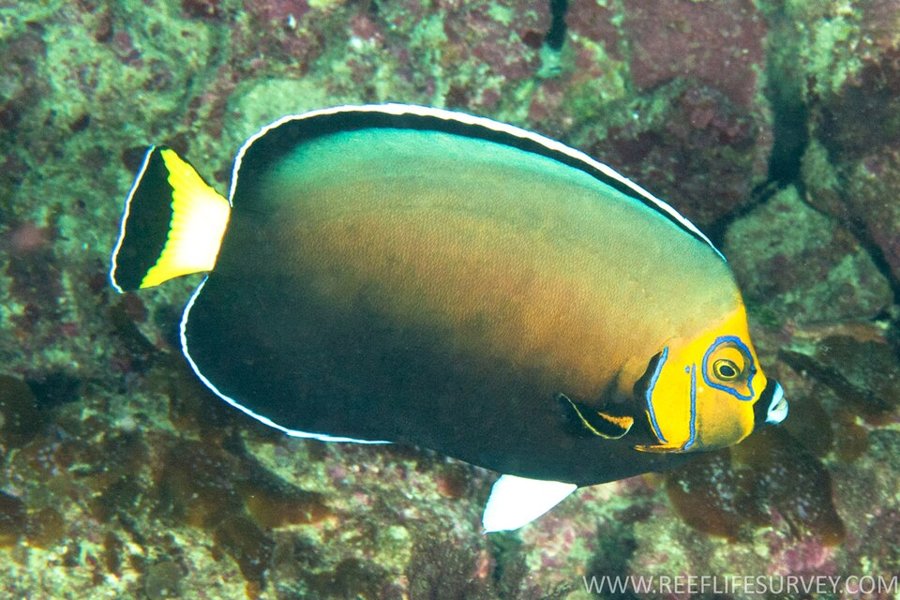
Blue-spotted jawfish (Opistognathus rosenblatti)
Photo: Rhododendrites / CC BY-SA 4.0 · Wikimedia Commons

Fish

Blue-spotted jawfish

Opistognathus rosenblatti

Where it's found
Gulf of California, Mexico, in colonies of up to several hundred fish on sandy rubble at about 12 m.
Why it's rare
Single-region endemic and delicate to ship.
Care
About 10 cm. Needs a deep, soft, fine substrate to burrow and a tight lid (jawfish jump). Wikipedia notes that damage and losses are linked to rough handling, abrasive substrate, bare glass and water above about 21 °C, so it needs cool water.
Price
No dated, verifiable price found.
Conservation & ethics
Wild-caught. Not listed in the CITES Appendices (checked against Australia's EPBC list of CITES species, Feb 2025 compilation).

Sources: Wikipedia · FishBase · iNaturalist
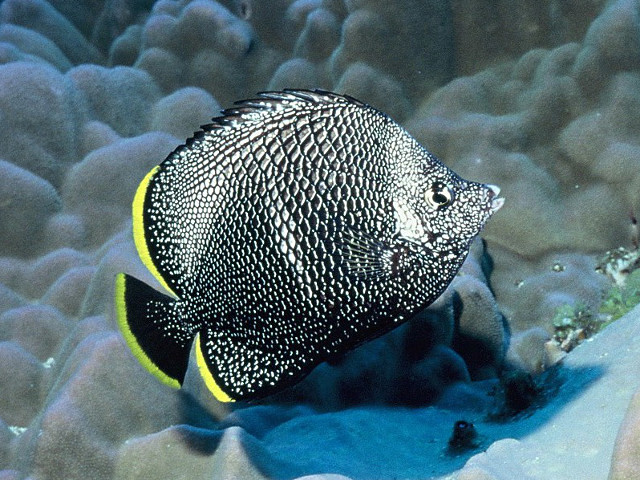
Fish

Candy basslet

Liopropoma carmabi

Where it's found
Tropical western Atlantic from the Florida Keys and Bahamas through the eastern Caribbean, most often around Curaçao, at about 15–70 m.
Why it's rare
Widespread but cryptic and deep, so it is hard to collect.
Care
Small (to about 6 cm) and shy, needing rockwork with caves. Eats small crustaceans such as brine shrimp and krill.
Price
No dated, verifiable price found.
Conservation & ethics
Wild-caught. IUCN Least Concern. Not listed in the CITES Appendices (checked against Australia's EPBC list of CITES species, Feb 2025 compilation).

Photos: we couldn't find a freely licensed photo. See FishBase photos.

Sources: Wikipedia · FishBase · iNaturalist
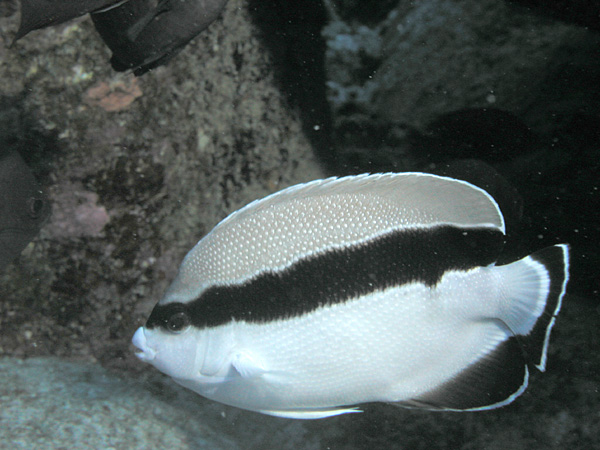
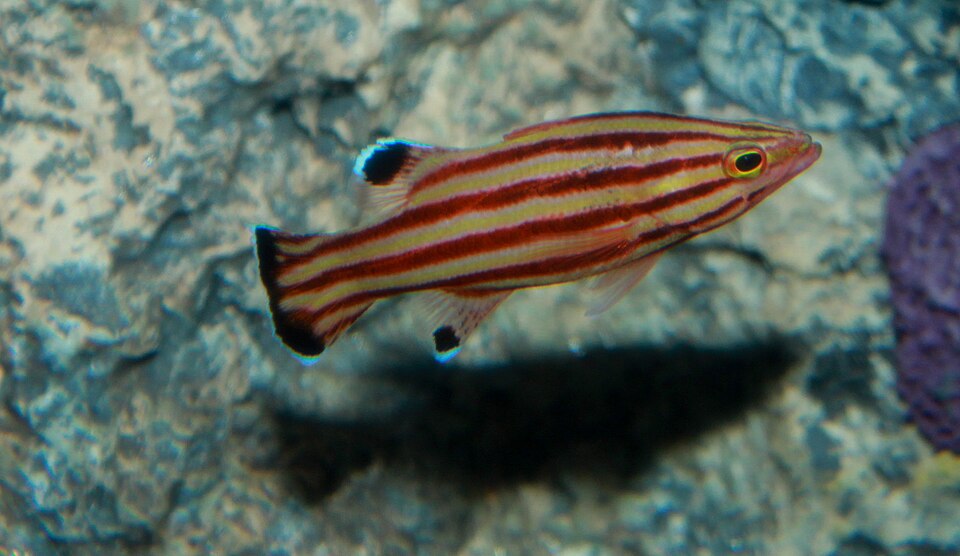
Swissguard basslet (Liopropoma rubre)
Photo: Brian Gratwicke / CC BY 2.0 · Wikimedia Commons

Fish

Swissguard basslet

Liopropoma rubre

Where it's found
Western Atlantic, including the Caribbean.
Why it's rare
Less rare than the candy basslet, but a reclusive fish of deeper reef recesses that is prized for the same striped look.
Care
A small, secretive basslet that wants plenty of rockwork caves.
Price
No dated, verifiable price found.
Conservation & ethics
Wild-caught. Not listed in the CITES Appendices (checked against Australia's EPBC list of CITES species, Feb 2025 compilation).

Sources: Wikipedia · FishBase · iNaturalist
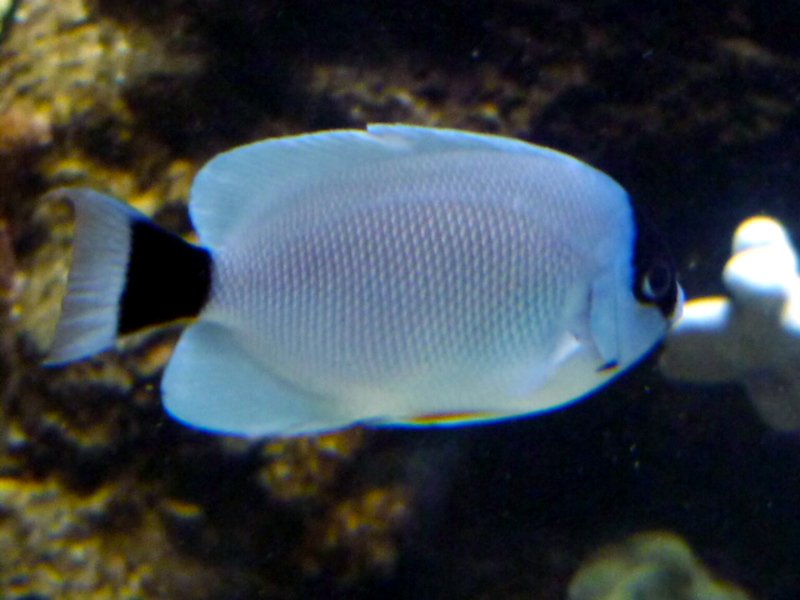
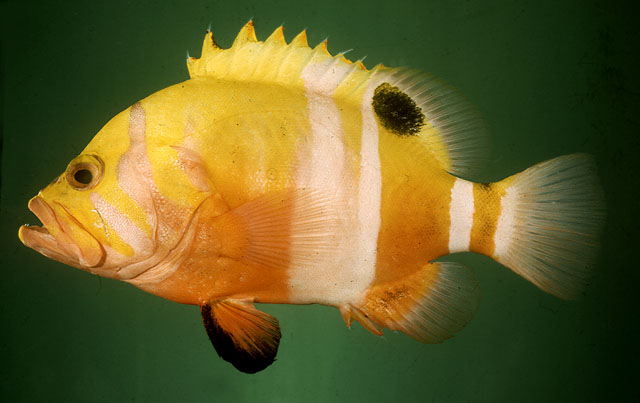
Neptune grouper (garish hind) (Cephalopholis igarashiensis)
Photo: John E. Randall / CC BY-SA 3.0 · Wikimedia Commons

Fish

Neptune grouper (garish hind)

Cephalopholis igarashiensis

Where it's found
Indo-Pacific, from Japan to Fiji, French Polynesia and Australia, on drop-offs, seamounts and offshore banks at about 64–250 m.
Why it's rare
Naturally rare and very hard to bring up alive: it needs special decompression. Okinawa Churaumi Aquarium was the first aquarium to display it, in January 2009.
Care
A predator of fish and crustaceans that reaches about 43 cm (commonly 25 cm), so it needs a very large system. A public-aquarium-level fish.
Price
Wikipedia reports a juvenile sold in Singapore for SGD 8,000 (about US$6,300), but without a date, so we treat it as anecdotal.
Conservation & ethics
Wild-caught. Also targeted by subsistence and sport fisheries. Not listed in the CITES Appendices (checked against Australia's EPBC list of CITES species, Feb 2025 compilation).

Sources: Wikipedia · FishBase · iNaturalist
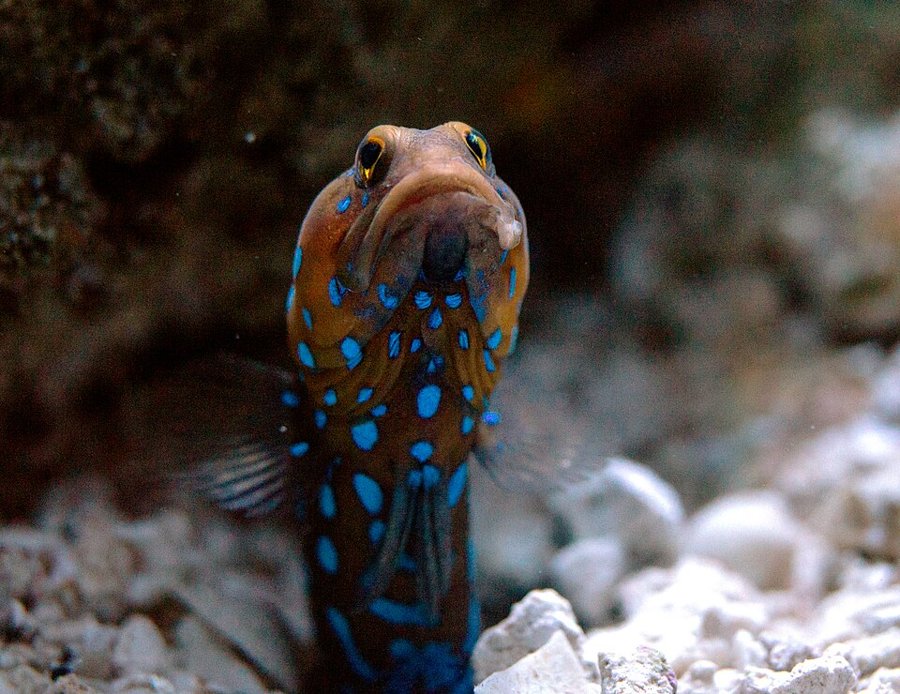
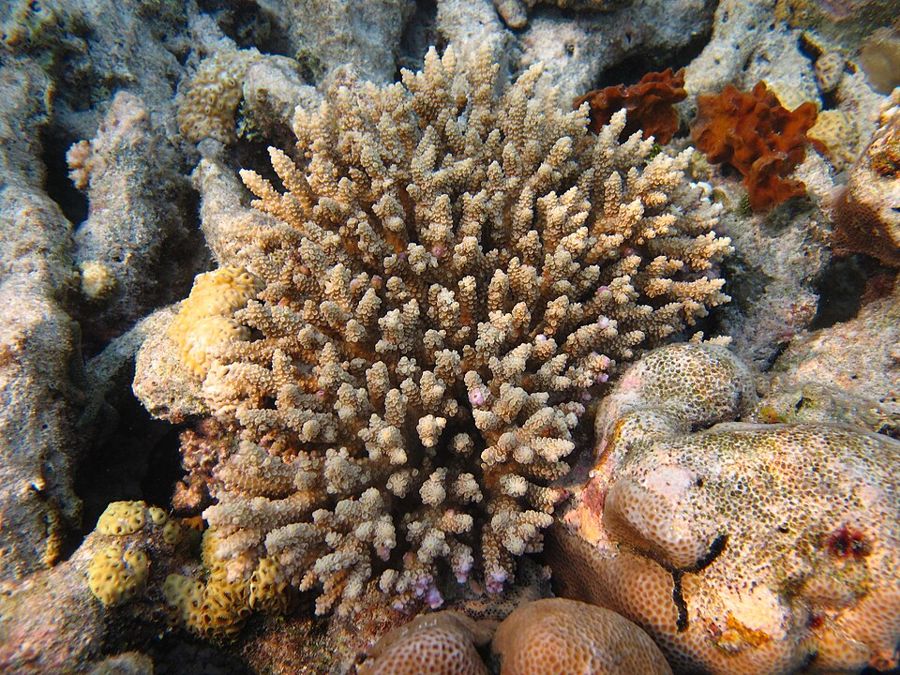
Wild A. tenuisWild Acropora tenuis colony in the Maldives, the species behind the Walt Disney morph
Photo: MDC Seamarc Maldives / CC BY-SA 4.0 · Wikimedia Commons

Coral (SPS)

Walt Disney Acropora

Acropora tenuis (named colour morph)

Where it's found
A tank-propagated clone, not a wild Australian coral. CORAL Magazine reports that Florida hobbyist Mike Biggar (Big R Corals) bought a plain green frag at a swap, and it coloured up about two years later. The species ranges from the Red Sea across the Indo-Pacific.
Why it's rare
One lineage spread only by fragging, with demand driven by its multicolour look (green base with blue, lavender and orange tones).
Care
Typical Acropora: mature, very stable tank, high light and strong flow, steady alkalinity and calcium. See our coral care guide.
Price
No dated, non-vendor price source found.
Conservation & ethics
Aquacultured frags of a single clone, which puts no pressure on wild reefs. All stony corals (Scleractinia) are CITES Appendix II, so cross-border shipments need permits.

Named morphs are single aquarium-grown colonies, so no freely licensed photo of the morph exists; the photo shows the wild species.

Sources: CORAL Magazine: Rockstar Acropora · Acropora tenuis on iNaturalist

Wild A. tenuisWild Acropora tenuis colony in the Maldives, the species behind the Homewrecker morph
Photo: MDC Seamarc Maldives / CC BY-SA 4.0 · Wikimedia Commons

Coral (SPS)

Homewrecker Acropora

Acropora tenuis (named colour morph)

Where it's found
A Fauna Marin rainbow A. tenuis. Hobby coral databases list its origin as Indonesia, where A. tenuis is widely mariculture-propagated. It is not an Australian coral, despite the common belief.
Why it's rare
Prized for colour (orange, pink, turquoise and yellow under blue light) rather than wild scarcity.
Care
As for other Acropora: high light, strong flow and very stable chemistry.
Price
No dated, non-vendor price source found.
Conservation & ethics
Aquacultured or maricultured. CITES Appendix II (all Scleractinia).

No freely licensed photo of the named morph exists; the photo shows the wild species.

Sources: Acropora on Wikipedia · Acropora tenuis on iNaturalist

Plating MontiporaPlating Montipora capricornis in an aquarium, a related Montipora
Photo: Emőke Dénes / CC BY-SA 4.0 · Wikimedia Commons

Coral (SPS)

Gold Rush Montipora

Montipora sp. (named morph)

Where it's found
Named after Corals Down Under, the Australian collectors who found it (Reef Builders, 2012).
Why it's rare
One named Australian-origin lineage, prized for a metallic greenish-gold sheen with an orange edge and neon polyps.
Care
Montipora are among the most light-demanding hobby corals, but they are generally hardier than Acropora.
Price
No dated, non-vendor price source found.
Conservation & ethics
Now spread as captive frags. CITES Appendix II (all Scleractinia). Note: we could not verify the history of the 'Wall Street Monti' you may have heard of, so it isn't profiled.

No freely licensed photo of Gold Rush exists; the photo shows a related plating Montipora.

Sources: Reef Builders: CDU Goldrush · Montipora on iNaturalist

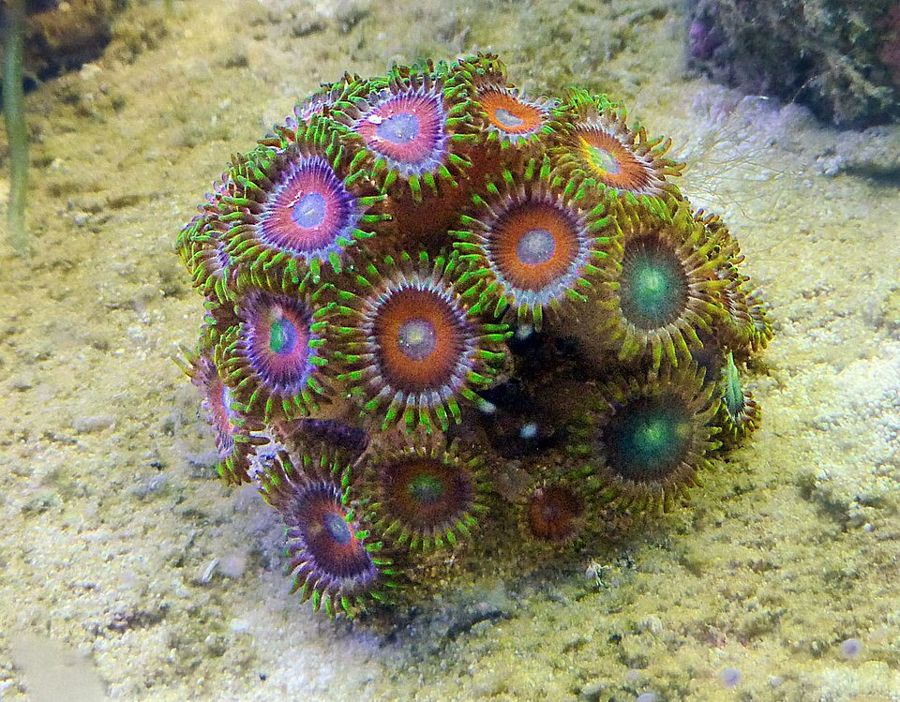
Rare named zoanthid morphs (Zoanthus spp.)
Photo: Kazvorpal / CC BY-SA 3.0 · Wikimedia Commons

Coral (soft / zoanthid)

Rare named zoanthid morphs

Zoanthus spp. (and Palythoa)

Where it's found
Zoanthids are colonial polyps found on tropical reefs worldwide. Collector morphs (such as the Dragon Eye pictured) are colour lines spread by fragging.
Why it's rare
Named lines start from a single colony and are traded as polyp counts; scarcity comes from naming and demand, not wild rarity.
Care
Generally hardy in moderate light and flow. Safety: many zoanthids and especially Palythoa can contain palytoxin. Wear gloves and eye protection, never boil rock with them, and see our glossary.
Price
No dated, non-vendor price source found.
Conservation & ethics
Mostly captive-propagated. Zoanthids are not stony corals and are not CITES-listed.

Sources: Zoanthus on Wikipedia · Wikimedia Commons photo · Zoanthus on iNaturalist

Keep exploring: coral types & care · reef conservation · reef glossary